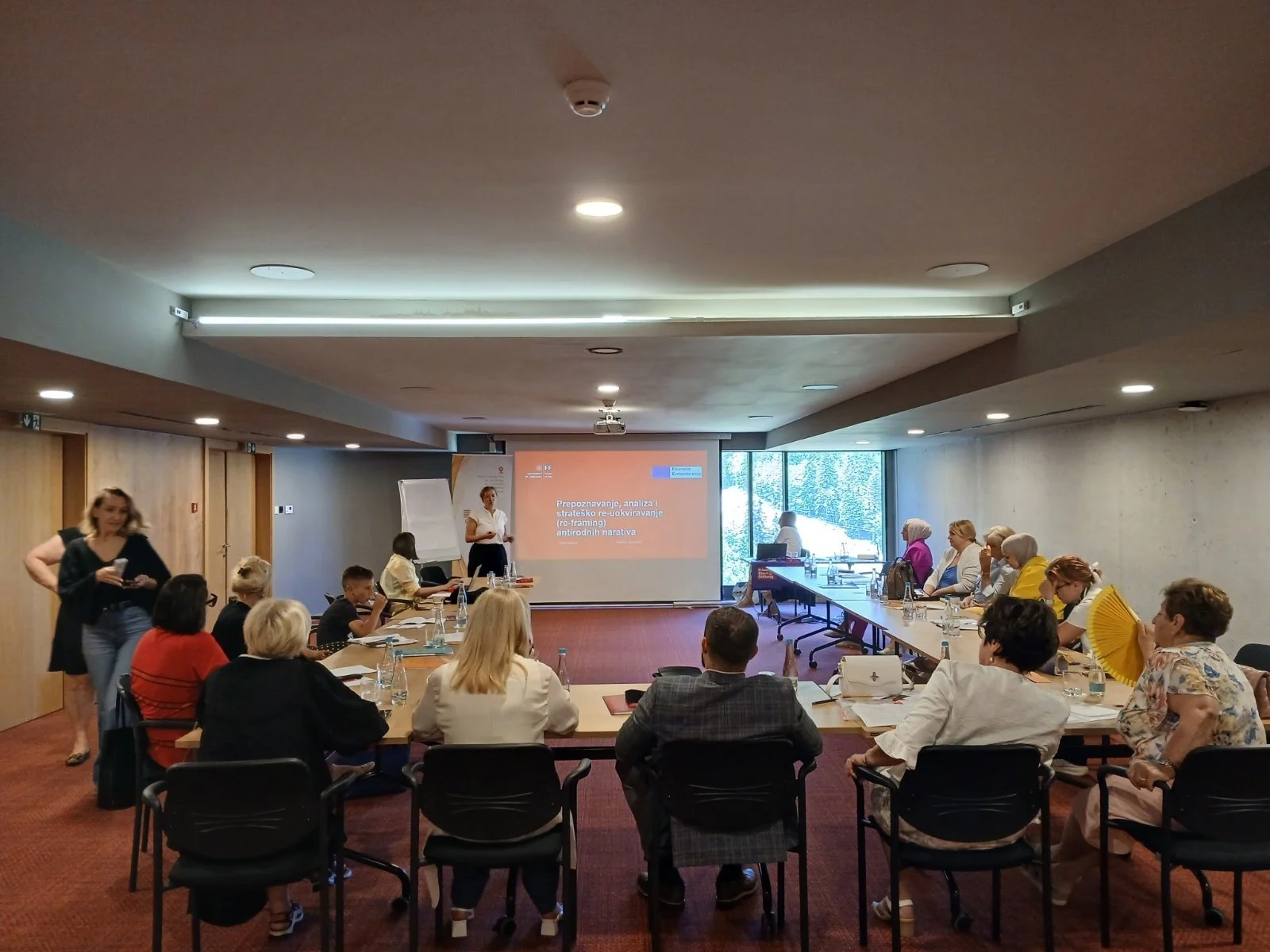
In June 2026, I led a workshop titled Framing – kako koristiti jezik strateški i suprotstaviti se anti-rodnim diskursima (Framing – How to Use Language Strategically and Counter Anti-Gender Narratives). The one-day workshop formed part of the Akademija ravnopravnosti programme, organized regularly for political representatives by Sarajevo Otvoreni Centar and Friedrich Ebert Stiftung. The training was held for 17 political representatives from across Bosnia and Herzegovina.
Drawing on findings from my AntiGenderInBiH project, first my colleague Prof. Zlatiborka Popov-Momčinović and I introduced participants to the dynamics of anti-gender mobilisation and the communication strategies used to turn “gender” into a symbolic political threat. We considered how these narratives connect gender equality with broader fears relating to identity, family, religion and social change, allowing anti-gender actors to appeal to audiences across existing political and ethnonational divisions.
A central focus of the workshop was framing: the process through which language gives meaning to political issues and influences how people understand them. We explored how advocates of gender equality can communicate more strategically without simply repeating the terminology and assumptions embedded in anti-gender narratives. The workshop created a practical space in which research findings could be connected to the everyday communication challenges faced by political representatives working in Bosnia and Herzegovina’s complex political environment.
For me, the event represented an important step in bringing the AntiGenderInBiH project into direct dialogue with political practice. It demonstrated how academic research can contribute to the development of more informed and effective responses to anti-gender mobilisation.
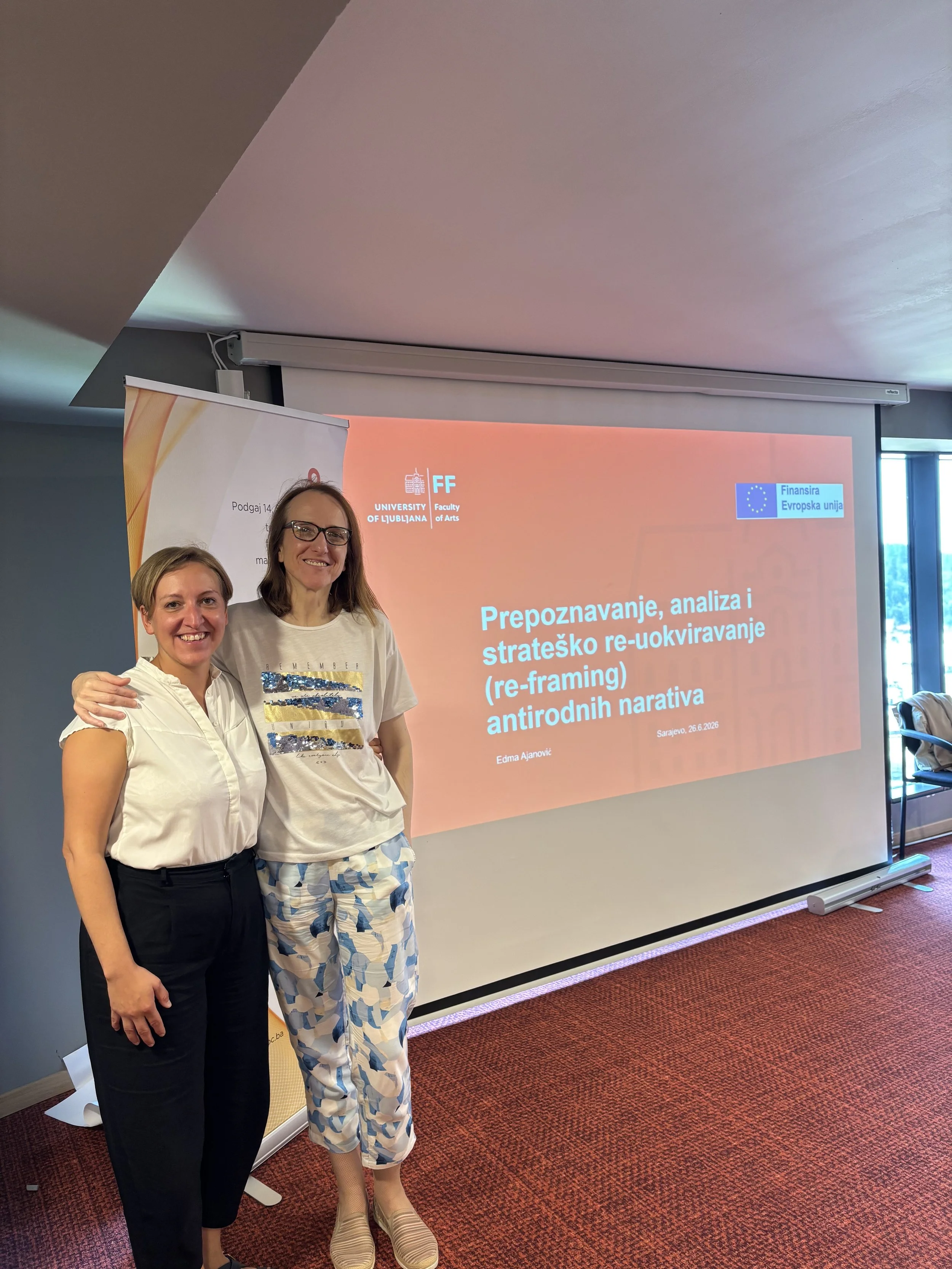
Zlatiborka Popov-Momčinović and Edma Ajanović